Wednesday, August 19, 2009

The business of songwriting

DSC09800

This post is based on a recent talk I gave at COPA (Campus of Performing Arts)

Its based purely on my own methods and findings

How I got started

I decided years ago that I wanted to be a songwriter. I’d always written songs, but never seriously and I’d never tried to make a living from it. I wanted to be a songwriter, but I wasn’t one. I was too busy being a gigging musician. A book I read gave me a wake up call: I realised it was pointless wanting to be a songwriter and that I should either give up the idea, or really try to work at it. (By the way the title of the book is irrelevant & it was a crap book except for one inspiring chapter, so I’m not going to advertise it here!) I made a conscious decision to do something about it and started to work on a plan of action…

I read Pat Pattison’s book “writing better lyrics” which gave me some amazing techniques and ideas. I worked with a partner & drew up a schedule and we wrote together on a regular basis as if we had a day job. I started telling everyone I knew that I was a songwriter. It took about a year until we got our first professional writing job: A friend asked us to write songs for an educational show to be performed at schools. The show was successful and the songs were well received. We were hired to do two more shows.

Soon after that we found a singer who was looking to record an album. We wrote, recorded and produced the entire album (except for 1 song). She licensed the album to Gallo Records, and we watched as the album become a monumental flop! My partner and I did all the writing and recording for free and earned a whopping R35 each from album sales. However it was the cheapest and best education I could ever have received. From that one album I learned about sales, marketing, distribution, contracts (get a lawyer!), performance royalties, mechanical royalties  and most importantly I learned a lot about songwriting.


My philosophy: All writing is good for you

Since then we’ve written in wide variety of styles for radio & TV commercials, theatre productions, meditation CDs, pop artists, kid’s CDs and a bunch of other stuff. I’m a songwriter, I’m happy to take on the challenge of writing in any style. I’ve lost the musical snobbishness I had as a student.

The obvious starting point is to write. And write. And write. There are many courses & books around to help you, but that’s not what this article is about. As with anything in the music industry you have to be good at what you do. That’s a given. I’m assuming that you’re already at a point where you’re writing songs and are looking for a way to make a living as a songwriter. You have to build up a library of songs, and they have to be recorded. Properly. There is no such thing as a demo anymore. Demos are unacceptable. Your songs need to be adequately recorded and produced. If you don’t sing well enough, pay a session vocalist or barter with one. I recommend setting up a simple home studio as it is far cheaper to do than always having to pay studio time.

Something that I have found invaluable is having a songwriting partner. Someone to share the writing means less insecurity that you may be writing crap, and also helps to take you in directions you wouldn’t otherwise consider. A songwriting partner may also add skills/talents that you lack, such as a different vocal range, a good keyboard/guitar player etc.

Now back to the part where I assumed you already have songs recorded. What do you do with them?


Here is a list of things I’ve done (and often continue to do)

  1. Tell everybody and anybody who will listen that you are a songwriter. Work often comes from places where you least expect it.
  2. Make sure your songs can be heard easily by anyone. This means carrying CDs with you; putting up a website, MySpace page, FaceBook page etc.
  3. Keep your ears open for bands/artists going into the studio to record, and remind them that you’re a songwriter.
  4. Pitch your songs to artists or bands whenever you can. Be careful of playing just any of your material though, make sure it fits their style.
  5. Network. In real life and online. Go to jam sessions. Hang out with musicians. Try and meet people in the record industry and the advertising industry. Use FaceBook, Twitter, write a blog or whatever else is out there. Engage with people.
  6. Be an opportunist. Always be on the lookout for ways to market yourself. My partner & I were commissioned to write a love song for a woman who wanted to propose to her boyfriend. We approached Radio 702 and the whole thing was broadcast live on radio.
  7. Join sites like Songlink and Taxi but be warned: Songlink and Taxi are expensive and there there are some dodgy sites out there waiting to take your money. Do your research before paying for anything and have a library of songs ready to send.
  8. Read and contribute to relevant forums. You’d be surprised at the amount of information out there. A few that I like: Sound on Sound, Cakewalk, CD Baby, Composers Association of S.A. (CASA)
  9. Get a routine. Write regularly. You’ll start to develop a method and a style.
  10. Carry a notebook around and always be on the lookout for song ideas. Write them down, record them into your phone.
  11. Don’t be too precious about your songs. Be open to criticism, but be aware of who who is doing the criticising. If it is someone you respect, take note, if it’s not then take it with a pinch of salt.
  12. Pump Audio licenses independent music for film, television & commercials. As with anything, do some research before sending them your music.
  13. CD Baby is a great place for indie musicians to sell their music
  14. Some good places for info on various aspects of the music industry: http://sivers.org/ http://blog.artistshousemusic.org/  http://www.arielpublicity.com/

The business side

I learned most of the business stuff the guerrilla way, by making mistakes and later the right way from Donald S Passman’s “All You Need to Know About the Music Business”. It should be mandatory reading for all musicians

Join Samro immediately. They will handle your performance royalties.

I use Norm for my mechanical royalties, but there are other organisations handling mechanicals too.

DO YOUR HOMEWORK BEFORE JOINING! This means reading the organisations literature, asking them as many questions as you need to. Ask other industry professionals for advice. 

DON’T JOIN AN ORGANISATION OR SIGN A CONTRACT WITHOUT BEING TOTALLY CLEAR WHAT YOU ARE GETTING YOURSELF INTO.

Conclusion

For me songwriting has become the primary focus of my career, but I’ve had to be creative to be able to make a living from it. I’ve learned to create my own platforms for selling my songs which include recording, distributing and marketing my own CDs. Empower yourself by learning all there is to learn about your craft and that includes the recording/programming techniques, marketing, distribution and sales.

Songwriting is a great way to earn a living even if you don’t ever have that number 1 hit song in the U.S.A. Getting enough good work in circulation in enough places should see you getting a fairly steady stream of income, and who know perhaps that hit will come along when you least expect it.

Good luck!

Friday, August 7, 2009

People die from exposure.

DSC00489 So my songwriting partner & I write a song. We hear that a popular local TV drama is looking for a song for one of their characters to sing, and our song happens to be the right genre. We submit it. They love it. In fact they gush. And ask us to submit another. They love it even more, and shower us with praise. They’d love to use it in an episode and they’d like us to record their cast member singing it. We’re ecstatic. They tell us how they had paid a well know local songwriting team loads of money to come up with something suitable and it wasn’t a patch on ours.

And then came the bad news. There was no more budget left to pay us anything. “But think of the exposure”.

Ok, I’m thinking about the exposure:

  1. Our song gets played on national TV. But wait, how will anyone know it’s our song? Oh, of course we’ll be credited. I’ve seen those credits zoom across my screen so fast I’m not even sure what language they’re in. And does anyone actually even try to read them?
  2. The cast goes on a national roadshow and our song may be performed all over the country. Great. Remind me how that benefits me? Oh yes, the singer will be singing along to backing tracks recorded by me…for free.
  3. The singer might record our song on an album. Which might sell. And we would then receive our share of the 6.7% mechanical royalty (divided by the number of songs on the album, and based on the wholesale price of the CD)

So I go to my dentist and say. “You’re actually quite lucky. I can’t pay you, but you see, I’m a musician, and I play a lot of high profile gigs and whenever someone sees my lovely smile, think of the publicity you'll get.”

Monday, July 6, 2009

The truth about coach tours

Andrew the tour leader masterfully conducting  Clock tower, Skradn, Croatia Dubrovnik Some tour group members


I decided to book a coach tour of Dubrovnik, The Dalmation Coast and Montengro.

Why? Well firstly I’d never done one before and I was a little curious to see what they’re like. Secondly I’d been working hard lately and just felt like a holiday where everything was taken care of and I didn’t have to do too much planning. Thirdly it was pretty good value for money.

The beginning

Land in Croatia and find a representative of the tour company waiting. She leads me to the bus where I’m told that half the group will be arriving on the next flight in 45mins. I climb on board and am greeted by 20 people in varying stages of old age, all waiting patiently for the other 20 to arrive. I do an about-turn and go straight back to the airport bar to taste the local beer and hope that some younger people arrive with the second group.

Two beers later and the rest of the people arrived and they looked at least as old as the other lot. I jumped back on the bus and took my seat, feeling like I may have made a very expensive mistake and tried to work out contingency plans.

 The Coach

For much of the three hour trip to the hotel I was seated next to an elderly couple. He had his nose in a guide book, she fell asleep. Meanwhile we passed some of the most magnificent scenery I’d ever seen. I cursed and took photos. Meanwhile our tour leader Andrew introduced himself and gave a “brief” overview of what we could expect to see, and a bit of a history lesson. I felt like I was watching a documentary on Croatia rather than actually being there in the flesh.

On arrival at the hotel in the tiny village of Drvenik, things began to look up. I spotted a young girl getting off the bus and wondered how the hell I could have missed her earlier. I immediately introduced myself and basically told her that like it or not, I’d be hanging with her for the rest of the tour. Fiona was an Australian living in the UK, and like me, travelling alone. We dropped off our bags and immediately went to the beach with a couple of beers.

  The Middle

A short overview of the trip

Day two involved a long bus ride (with obligatory “comfort” stops along the way) to the Krka Valley Nature reserve where we spent most of the day wandering around amongst throngs of tourists. It was pretty, but coming from South Africa I couldn’t help feeling that perhaps I should have stayed at the hotel & explored Drvenik a little.

Most of the tour group were elderly English couples, obsessed with the weather. One morning whilst checking my email one old gent enquired “Oh, you know how to use that thing?” (referring to the PC). I answered yes he immediately asked “Are you checking the weather?”

Day three took us to the Diocletian palace in Split.

Day four we checked out and headed into Bosnia spending a few hours in the town of Mostar. We then headed to Dubrovnik where we checked in to the four star President hotel.

Day five we had a local guide to show us the old part of Dubrovnik. Fiona and I ducked out after five minutes of listening to yet more facts and figures and managed to see the wonderful city on our own. A very wise move in retrospect.

Day six was a “free” day. Most of the people from the tour headed into town to try and see more sights. It was a rainy day and I decided I needed some rest and relaxation so I stayed behind and shared a few drinks with my Aussie friend, and went for an awesome massage. The rest of the people returned in the evening drenched, and full of stories of traffic jams and flooded roads.

Day seven involved yet another long bus ride to Montenegro. I went along, with the thought that if I didn’t go I might miss something amazing. Montenegro was beautiful. More medieval towns. My head was full of Medieval towns at this stage though, and 2 1/2 hours in a bus to spend 1 hour in a medieval town, followed by another hour in the bus and another 2 hours in a medieval town was a bit too much for me.

Day eight, back to London.

Some thoughts

Things I liked about the trip: It really was good value for money, the hotels were great and so was the food. Many entrance fees were included too. I saw many amazing places in a short space of time. I really didn’t have to think much or plan anything. It was all taken care of.

Things I didn’t like: Nothing was left to chance. We were briefed about every aspect of the place we were visiting down to the location of the cleanest toilets. I felt overwhelmed by the amount of information – we were told the history of every area we visited in great detail (though most of the group loved that). There were no surprises and nothing left to discover by yourself. And I spent too much time in a bus.

I could quite happily have done my own thing on four of the seven days. I would also have loved to have spent a few days in each of the towns rather than just a few hours. The tour did introduce me to some wonderful places though, and I would love to go back someday.

Would I do a tour again? Probably not, although I did end up having a fantastic time.

The cast:

‘Super A’ (AKA Andrew) Our leader who knew everything there was to know and made sure we did too. He gained the title by miraculously popping up in the most unexpected places and giving us guidance. He said things like “For those of you who are into winds, Croatia has 10” (In all fairness, Super A really knew his stuff and could not be faulted)

Mr Smarty Pants Tall bearded man with suspenders that pulled his pants rather high. He felt that he just had to add little bits of really interesting information (rather loudly) to everything Super A told us.

The Dame and her daughters A lovely old lady who smoked long thin cigarettes and had a rather Bohemian air about her. She was travelling with her two grown up daughters

The Telly Tubbies  I never got a chance to speak to this couple, but the name seemed to fit

The Railwayman A lovely guy who worked for the railways and had typically British teeth and a broad Welsh accent. His wife informed us that they were spending his pension on coach tours.

The Giggler A laugh that cut through anything

Stringfellow  A tall, thin Englishman with impeccable manners. Travelled alone. Daily attire (no matter how hot the weather): A tie, long sleeves with metal sleeve garters, a straw hat, pants pulled high and a money belt tied tightly round his waist. Politely called ‘Super A’ aside to correct him if there were any errors in his commentary.

Billy Bob (AKA Ivitsa) Our wonderful driver who was the spitting image of Billy Bob Thornton

Suzanne (AKA Fiona) The only person younger than me. Australian, lovely travel companion. Never turned down a beer, in true Aussie fashion.

And of course no less important were the extras whose names I didn’t catch.

The End.

Sculpture in Split by Mestrovic  Dubrovnik  Me in Dubrovnik 


You can see more of my photos of the tour here: http://picasaweb.google.com/graeme.sacks/CroatiaJune2009?feat=directlink

Monday, June 1, 2009

I just don’t get it!

 Picturesque rugby fieldI just don’t get it. Sport. I’m not particularly competitive. I like jogging and cycling. But not against anyone. I have no need to beat someone. Don’t get me wrong, I am ambitious. I do push myself to achieve certain goals. I guess I compete against myself.

So today there I was having a quiet lunch, quite contentedly reading my book and minding my own business, when I suddenly got this creepy feeling that someone was watching me. I slowly moved my eyes above the pages of the book, and was confronted by a whole restaurant full of people, all staring at me. Then a huge roar erupted and I realised that they were watching the big screen TV on the wall behind me. A rugby match had started. Suddenly, people that ordinarily wouldn’t give each other the time of day were shouting comments to each other and cheering together. I must tell you I felt really left out. And I looked closer at these people, expecting to find the stereotypical beer-bellied, white South African males doing the shouting. There were a few of them, but mostly the place was filled with a cross-section of our Jozi society, all on the edge of their seats.

  After a few more unsuccessful attempts at focusing on my book I decided to turn my chair around and watch the match. Now I do understand the rules of rugby (I went to a government school in small town South Africa), but something I don’t do is follow the sport. I don’t know the names of the players (unless they’ve been in the news for some sordid drug-induced orgy). I don’t know anything about the various teams and I don’t support a team. I guess the “human drama” of the match is totally lost on me. I watched ten minutes of the game, was thoroughly bored so I went home, to read my book in peace.

Then there are the connotations from school. And perhaps this is where my loathing of most sports began (with rugby topping the list). Capricorn High School was the only English school in Pietersburg (now Polokwane) and as a result, our rugby teams usually got thrashed by the bigger and better kids from the many Afrikaans schools in the area. Our teachers lived for the day that Capricorn would be victorious. Sports were high priority at Capricorn High School. Academics and arts were not.

We had to attend school sports events to support “our” teams. They weren’t “my” teams! They were jocks, who had special privileges at the school because they played for one or other school team. They were lauded by teaches & idolised by girls. I hated the very ground they ran/kicked/jumped/tackled on. I was in the school band. I had an earring (this was a while back). I had a strange haircut. I wore strange clothes. Belonging to a club or supporting a team seemed to me to be a sinister way of giving up your individuality. Willingly! (I’m now well aware of the irony that my rebellion led me to join a club of sorts. Just not a mainstream one. I so wanted to be a real punk!)

I learned at an early age to always question authority. Teachers became the enemy. I bunked every single sporting event throughout my school career. I got a hiding every time I was caught. And I got a lot of hidings. Which just served to make me loathe my teachers and their sacred sports all the more.

And its these issues that I carry with me today, every time there is a big sporting event. I still can’t be bothered to read newspaper articles about teams trading players for millions, or about how the new coach/manager/club-owner has succeeded in bringing his team glory (or not). And I can’t seem to get myself to say “we” won, even if it’s a South African national team that’s victorious. I try to enjoy the game when I’m in a room full of people, but I always only manage a sort of platonic pleasure. Living in a country that is so sports mad really does make me feel left out sometimes. Perhaps one day I’ll get it?

Wednesday, May 27, 2009

Things I learned about QuickBooks

Computer services, Lagos, NigeriaMy PC finally gave up the ghost a few weeks ago. It had worked smoothly for four years, I figured it was a pretty good innings. And I was prepared. Everything was backed up. So I bought a new PC with Windows Vista and began the task of installing all my old software. It was a rather tedious and lengthy process, but I managed. Until I tried to install QuickBooks.

My version of QuickBooks wasn’t compatible with Vista. I called the local support number and was informed that there is no upgrade available, I’d have to buy the full program again. Cost: R1000

I decided to see if I could purchase & download the software online. The South African site doesn’t offer a download option, so I started making enquiries on Twitter. I found out that there are a whole host of online applications that look really good and at reasonable prices (some even have basic versions for free).

This didn’t solve my problem of how to access my old files though, so I investigated further. Then I discovered that QuickBooks is available as an online version. There is a free version, a “basic” at $9.95 per month and a “plus” version at $34.95 per month. The basic looked fine for my needs, until I noticed that it doesn’t allow one to import data from the desktop version. $34.95 a month was too much for me so I continued my search.

I was then alerted to the fact (via Twitter once more) that there is a free version of QuickBooks available called “SimpleStart”. Its free to download from the U.S. In South Africa it costs R1000, remember?

I went for the free version of course! It was an enormous 320MB download. Once downloaded I installed it without a hitch. Then I tried to restore my backed-up files from the old version of “SimpleStart” (Which I had paid R1000 for a few years ago) I got the message “This file was not created with the U.S. version of QuickBooks” and it refused to open the files. A few minutes on Google told me that others had experience similar issues with non-U.S. versions of QuickBooks.

So I’m still not sure how to resolve this issue, but will probably end up doing the following:

  1. Pay R1000 for the South African version of QuickBooks SimpleStart.
  2. Access my old data (which hopefully it will allow me to do).
  3. Print out all the information I need (invoices, clients etc)
  4. Open an account with an online service such as Freshbooks
  5. Manually enter all the data into Freshbooks
  6. Uninstall QuickBooks, and throw away or burn the disks


The lesson I learned: Where possible I’ll use online applications. Gmail has lead the way for me. If my PC crashes, all my contacts are still available online and I can access them from anywhere. No conflicts with new operating systems.

Now back to the task of retrieving my accounts…


My Twitter stream

Monday, May 25, 2009

The soul of retail?

Lekkersing SupermaketA recent lunch at a new restaurant in the trendy Melrose Arch centre in Johannesburg got me thinking. The food was good, the decor tasteful & the setting rather pleasant. It overlooked a brand new piazza and was flanked by other restaurants equally modern, each with its own particular theme and style. Yet there was something lacking. I tried to pinpoint the problem, which lead me back to my teenage years…(cue “flashback” music)

My first job was at Hillbrow Records. I had to write an exam to get the position. It was a music quiz with questions like “Name the members of the Beatles & the instruments they played” and “Who composed Pictures at an Exhibition?”. I must have passed, because I got the job. For me it was heaven. I’d spent so many hours browsing, and blown all of my pocket money in that store, that it felt only right that I should work there.

Records were still the thing then. CDs had just been introduced, but only a few wealthy music lovers could afford them. The shop had row upon row of wooden record bins which contained everything from the latest hits to the most obscure bands.

My favourite part of the store was right at the back: The sale bins.There was nothing better in the world than to go into Hillbrow Records, with its tattered carpets, bad lighting and surly staff, and rummage through dusty records in those bargain bins. When you found a gem (and you almost always found something interesting) you felt like an archaeologist who has discovered the the holy grail. It was a sense of achievement. You’d found something amazing, that others had overlooked through their ignorance and sloppy  sleuth work.

The staff at Hillbrow records were an interesting bunch of scraggly punks, hippies, varsity students,musicians and other oddities. But they had one thing in common: They were music fanatics. They ate, drank (quite a bit actually) and breathed music. There were no computers, but they knew what was in stock and where to find it. They also knew albums related to the one you were looking for. And bands you’d never heard of that played the same genre. Better.

Hillbrow Records had no theme. No interior designer had put their artistic flair into its decor, no catchy slogans, no glossy posters and no fake smiles. But it was a place that lured you in, and kept you there for hours. Hillbrow Records earned the right to be great, because it paid its dues and developed an identity and a soul.

A local CD chainIn those days there were very few franchises. Hillbrow had an array of interesting coffee shops, delis, bakeries and restaurants, each with its own unique character, usually thrust upon it by a proud and dedicated (and often rather quirky) business owner. There was Carlo’s with old black & white photos of Joburg, bodybuilders and movie stars lining the walls.  Cafe de Paris, Cafe Vien, Three Sisters.. Mini Cine used to show cult movies. All these little dives had something.

And the came the shopping malls. Generic. Tiled. The same shops. The same food. The same music. The same movies. These malls are full of trendy, shiny new restaurants all designed with one intention: To replicate. And perhaps the problem is one of intent.  Do you open a shop or a restaurant because you want to get rich and take over the world, make your brand a household name? Or do you do it because you have a passion? A passion for people, music, cooking, fashion…

The thing is, these franchises are usually good.The service, the food, the decor and the goddamned theme have to be good or else they won’t make money. But good is not good enough for me. I want real, not contrived. I don’t want to walk into a store that plays Ella Fitzgerald because some advertising exec sitting in an office miles away has decided that Ella fits the style of the store. I don’t want to walk into a place that feels like a product of market research.

Piccolo Prima Donna

Fortunately there are places in Jozi that still have soul, if you know where to look. Here are a few of my favourites (in my neighbourhood). Feel free to add to the list.

1. Zahava’s, (Norwood) My favourite breakfast spot. The feel is rather bohemian, the food Israeli/Mediterranean.The coffee is damn good. There is a lovely outside area and they often have live music on a Sunday – usually quiet jazz or blues & folk. When I was looking for a link to the restaurant I came across this post on Hello Peter it sums up the place beautifully!

2. The Radium Beerhall (Orange Grove) The oldest surviving pub in Johannesburg, this place just oozes character. Customers range from young to old and represent a complete mix of society. They make great Portuguese style pub food and also do a fine pizza. Live music a few nights a week.

3. Hi Fidelity (Killarney Mall) This CD/DVD store happens to be in a mall, but it still passes the test. They have a fantastic selection of CDs & DVDs and the staff are knowledgeable (They know who Emir Kusturica is for a start!)

4. Chapter 1 Books (Norwood) A great little 2nd hand book store. They also have a good selection of 1st editions and Africana

5. Piccolo Prima Donna (Norwood) I’ve been supporting this place for years. The food is consistently good. Italian, with a difference. It is warm, cosy and relaxed.


Wednesday, May 20, 2009

Visiting a school in Albert Street

Today my music partner Erika Strydom and I visited  Albert Street School in central Johannesburg. We were there to perform our children’s show “Stories from the Alphabet Tree”, based on our CD “The African Alphabet”

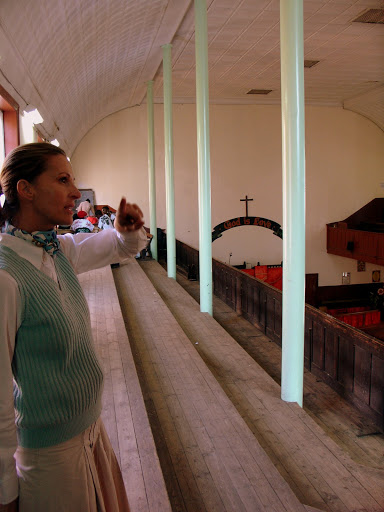
The school is housed in a dilapidated old Methodist church building and the headmaster told me they have around 500 students. Most of the kids are Zimbabwean refugees, many are here without parents.

Three classes are taught at the same time in the gallery of the church. This means that the teachers have to shout to be heard.

The place is old,overcrowded, yet spotlessly clean.

 The few papers lying around were being cleaned up by a young girl (out of view)

"Miss Beanie" (My sister in law is doing her teaching prac there)

The teachers all work here on a voluntary basis. Most are highly educated Zimbabwean refugees themselves.

One of the teachers (and me)

Erika tells the story of "The crocodile & the dung beetle"

Food is supplied by the Salvation army.

Most of the kids live in the Methodist church around the corner, along with over 2000 adults

They have been largely ignored by the South African government.

The kids are delightful, beautiful, inquisitive, intelligent, loving…


They deserve better than this.


Some links:

http://rebuildzimbabwe.org/home/

http://www.eliasfund.org/partners/albert-street-school

More of my photos of the school